

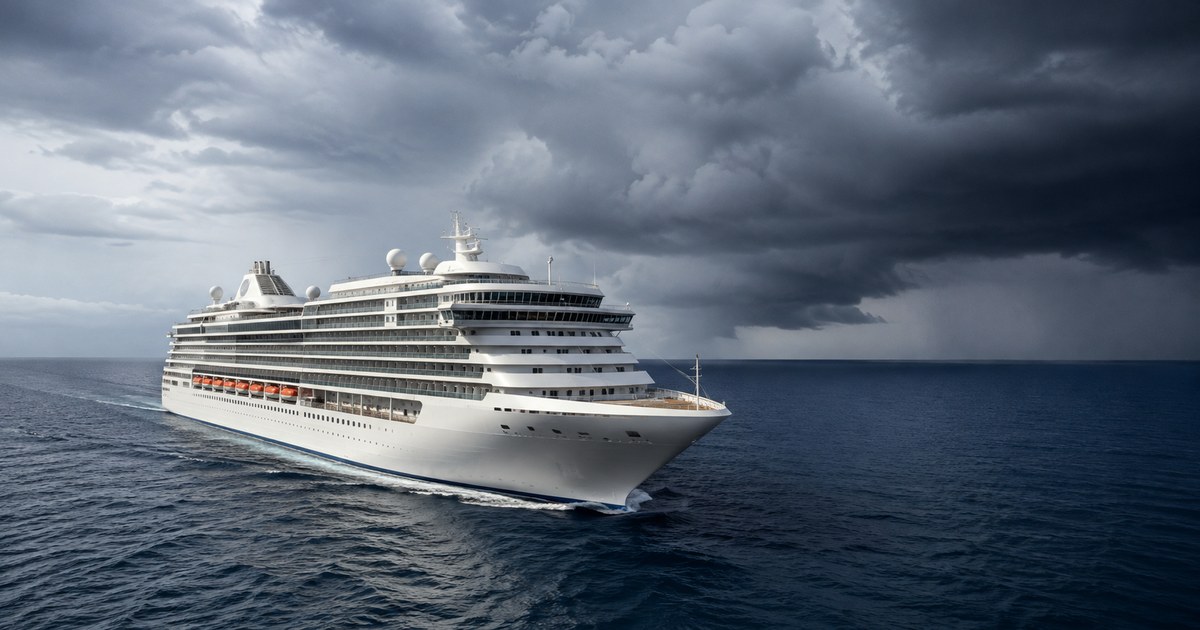
If you are looking at a fall repositioning sailing right now, do the airfare math before you do anything else. A 13-night crossing that prices out lower per night than a 7-night Caribbean loop stops being a bargain the moment you add a one-way ticket home from Barcelona in early November, a pre-cruise hotel night, and 13 days of gratuities instead of seven. Repositioning cruises are genuinely good value for the right traveler. They are just priced on a different set of assumptions than the sailings most people compare them to.
The second thing to know: you are shopping in the statistical worst month of the Atlantic hurricane season. That does not mean don’t book. It means book knowing that the itinerary you see on the confirmation is a plan, not a promise, and that the paperwork protecting you is thinner than most people assume.
What a repositioning cruise actually is
Ships follow the weather. When Alaska’s season ends in September, the ships that spent the summer running out of Seattle and Vancouver have to get to Mexico, California, or the Caribbean. When Europe’s season winds down in October and November, a large share of that fleet crosses the Atlantic to spend winter in the Caribbean. In spring, everything runs in reverse.
Those relocation voyages get sold as cruises. They are typically longer than a standard week — often 9 to 16 nights — heavy on sea days, and they end in a different country from where they started. The line’s incentive is to fill a ship that has to make the trip anyway, which is why the per-night number often looks unusually good.
Common fall patterns worth searching:
- Westbound transatlantic — Barcelona, Rome (Civitavecchia), Southampton, or Lisbon to Fort Lauderdale, Port Canaveral, or San Juan, usually with stops in the Canaries, Madeira, Azores, or Bermuda.
- Alaska to the West Coast or Mexico — Vancouver or Seattle down to Los Angeles or San Diego, sometimes continuing through the Panama Canal to Florida.
- Panama Canal transits — the classic repositioning route, and the one where the itinerary is the point rather than a byproduct.
- Asia and Australia moves — longer, sparser, and usually the best per-night value on the board, with the worst airfare attached.
Price the whole door-to-door trip, not the cruise fare
This is where repositioning cruises are won or lost. Build the full number before you compare anything:
| Line item | What people forget |
|---|---|
| One-way international airfare | One-ways are frequently priced far above half a round trip, and fall crossings put you in shoulder-season Europe pricing on the outbound leg. |
| Pre-cruise hotel | You want at least one night in the embarkation city on any overseas departure. Two if the flight arrives late. |
| Gratuities | Charged per person per night. A 14-night sailing carries double what a 7-night does. |
| Beverage and Wi-Fi packages | Also per night, and sea-day-heavy itineraries are exactly when people drink and stream more. |
| Vacation days | A crossing plus travel days can eat three weeks of PTO for a couple who each get two. |
| Documentation | Passport validity requirements, and any visa or entry authorization for the countries on the route. Check with the issuing government, not a forum. |
Once you have that total, divide by nights and compare it against a same-length, same-cabin-category sailing on a comparable ship in a normal itinerary. Sometimes the crossing still wins by a wide margin. Sometimes it barely wins, and then the sea-day question decides it.
Count the sea days honestly
A westbound crossing can include six or seven consecutive days without land. Some people consider that the entire selling point — the ship empties out during the day, the enrichment programming is better than on a Caribbean week, and there is finally time to use the spa, the library, and the running track. Other people are climbing the walls by day three.
Look at the port sequence and ask whether the calls are real destinations or filler stops the ship makes because it has to bunker fuel anyway. Then look at the ship itself. For a long crossing, indoor public space matters more than the waterslide count: a proper promenade or observation lounge, a decent theater, a self-service laundry, and connectivity that actually works mid-ocean. Satellite internet at sea has improved substantially on ships that have been upgraded to low-earth-orbit service, but coverage still varies by ship and by ocean, so confirm what is installed on your specific hull rather than the brand’s marketing page.
The hurricane part, without the drama
The Atlantic hurricane season officially runs June 1 through November 30, with activity concentrated in the late-August-through-October window and a statistical peak in early-to-mid September. That overlaps the front half of repositioning season almost exactly.
Modern cruise ships do not sail into hurricanes. They have days of warning, they move at speed, and the ocean is large. The realistic risks are not safety risks — they are logistical:
- Reordered or swapped ports. A Caribbean-side call gets replaced with somewhere the storm isn’t. This is the most common outcome by a wide margin.
- Delayed embarkation or debarkation. If a storm closes a port, the previous sailing returns late and yours leaves late. Your flight home is your problem.
- Cancelled sailings. Uncommon, but it happens when a homeport itself is hit.
- Rough seas. Even far from a storm, the swell travels. North Atlantic crossings in late fall can be genuinely bouncy regardless of tropical activity — bring whatever motion remedy works for you.
What you are owed when this happens is usually less than people expect. Passenger contracts give the line broad discretion to change the itinerary for weather and safety, and a missed port typically generates a refund of that port’s taxes and fees rather than a fare adjustment. Goodwill onboard credit is common but discretionary. Read the itinerary-change language in the specific line’s ticket contract before you book — it is public, it is linked from the booking page, and it is the document that governs, not the brochure.
Insurance timing is the part people get wrong
Named-storm coverage is generally written around events that were not foreseeable when you bought the policy. Once a storm has been named and is being tracked toward your route, most policies will treat it as a known event, and coverage purchased after that point may not apply to it. That argues for buying coverage early in the booking process rather than at final payment, particularly for hurricane-season and repositioning sailings.
Also understand the difference between trip cancellation for covered reasons, trip interruption and delay, and Cancel For Any Reason — which usually must be purchased within a short window after your initial deposit, reimburses a percentage rather than the full amount, and is the only product that reliably covers “I decided not to go.” Terms vary by policy, by underwriter, and by your state of residence. Read the certificate of coverage, and if the answer matters, ask the insurer directly in writing.
Protect the flights, not just the cruise
On a repositioning sailing your air is one-way in each direction, often on separate tickets, which removes the safety net a round trip provides. A few practical habits:
- Fly in at least one day early on any embarkation, and two for an overseas departure during storm season.
- Book the return for the day after debarkation if the cruise ends anywhere in the hurricane belt, or at minimum a late-afternoon departure.
- Consider the cruise line’s own air program. The pitch is that if the ship is delayed or the itinerary shifts, the line takes responsibility for rebooking you. Rules differ by brand and the fares are not always competitive, so compare, but for a one-way crossing the protection can be worth a premium.
- Check that the arrival city has reasonable nonstop service home. Ending in a small port with one daily flight is a different proposition than ending in Fort Lauderdale.
Why late summer is the right time to be looking
Two things line up in August. Lines have published most of the following year’s deployment, so next fall’s crossings and next spring’s eastbound repositionings are visible and bookable at opening inventory. And repositioning voyages tend to sell more slowly than seven-night Caribbean sailings, which means they stay open longer, they are more likely to see inventory adjustments as the date approaches, and solo travelers occasionally find reduced single supplements on them because a half-empty cabin on a relocation voyage is worse for the line than a discounted one.
The trade-off is real: book early and you get cabin choice and the best chance at reasonable one-way air; wait and you may get a better fare on a worse cabin with worse flights. For a crossing, where air is often the largest single line item, early usually wins.
Who should skip it
If you have limited vacation days, a low tolerance for consecutive sea days, kids who need programming that runs at full strength for two straight weeks, or a hard-scheduled event within 48 hours of your return, a repositioning cruise in September or October is the wrong tool. Take the seven-night sailing and put the difference into a balcony.
For everyone else, this is one of the few remaining ways to spend two weeks on a large modern ship at a per-night number that looks like a mistake. Just make sure it still looks like one after you have priced the flight home.
Before you commit, verify current tropical activity and forecasts with the National Hurricane Center, read your sailing’s ticket contract on itinerary changes, and confirm the insurance terms with the underwriter. If you would rather have someone else run the door-to-door math and compare crossings side by side, that is what our agents and comparison tools are for.
